Pretend play toys for preschoolers work best when they tap into something the child already enjoys doing, watching or talking about. A child who loves animals might enjoy playing vet, while one who follows you around during DIY jobs may be far more interested in a toolbox. Others might happily spend ages running a pretend shop, caring for dolls or creating stories around a farm.
So, rather than asking which pretend-play toy is best for a 3, 4 or 5-year-old, start by thinking about what that particular child likes to imitate and the stories they naturally enjoy making up. Then consider their age, the space available, and whether they would prefer a toy they can step into a role with or a smaller world they can create stories around.
Here are some of the main types of pretend play to consider and who they might suit.
Why do preschoolers enjoy pretend play?
Children of preschool age are surrounded by interesting things to copy. Shopping, cooking, looking after pets, visiting the hairdresser, going to nursery and watching someone fix something can all provide ideas for their own games.
Pretend-play toys give children props to recreate familiar situations and invent new ones. The toy doesn't need to dictate exactly how the game should unfold. A wooden ice lolly might be served in a café one day, sold from a shop the next and taken on an imaginary picnic another time.
We've written separately about why imaginative play matters. Here, we're concentrating on something more practical: which type of pretend-play toy is most likely to suit the preschooler you're buying for?
Play kitchens, food and shops for children who copy everyday routines
Pretend food, kitchens, cafés and shops can be a good fit for preschoolers who enjoy copying the everyday things they see adults doing.
You don't necessarily need a large play kitchen or market stall. Smaller play food sets can be added to games the child already plays and are easier to fit in.
The wooden Ice Lollies, suitable from age 3, are a good example. The set contains six painted wooden ice lollies presented in a wooden tray. They could become treats in a pretend shop, food in a play kitchen or something to serve during an imaginary café game.
If you're considering a larger kitchen, shop, or market stall, think about where it will live and how appealing it looks. For a grandchild, niece, nephew or friend's child, it's worth checking with their parents before arriving with a large piece of play furniture.
We've covered play food in more detail in our guide to creative ways play food fuels imagination and learning, so it's worth heading there if your child particularly enjoys this type of play.
Doctor and vet sets for children who love animals and caring play
A doctor or vet set suits a preschooler who likes looking after dolls, teddies, or animals, or who enjoys copying familiar appointments and check-ups.
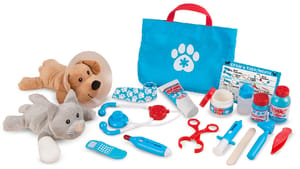
For animal lovers, the Pet Vet Play Set includes a cat and dog to look after as part of the game. Suitable from age 3, the 24-piece set includes pretend veterinary equipment such as a stethoscope, thermometer, and syringe, along with pretend treatments, bandages, a cast, and a recovery cone. There's also a reusable checklist and storage tote bag.
That gives children plenty of starting points for their own stories. One day the dog might need a bandage and the next the cat could be having a check-up.
When choosing between a doctor and vet set, the child's existing interests can make the decision quite simple. If animals are a regular feature in their games and conversations, a vet set may feel more immediately familiar and appealing.
Tool sets for preschoolers who like making and fixing
Some children are fascinated by practical jobs. If they're interested whenever someone pulls out a screwdriver, or they like pretending to build and repair things, a toy toolbox or workbench is worth considering.
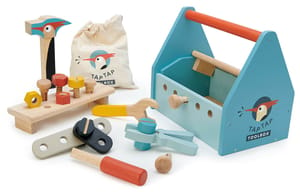
The wooden Tap Tap Tool Box is suitable from age 3 and contains a hammer, pliers, screwdriver, spanner, nuts, bolts, screws, pegs and wooden planks. The removable toolbox lids have pre-drilled holes and can be used as building plates, so children can use the pieces to make their own inventions rather than simply carrying around pretend tools.
This distinction matters when choosing tool toys. Some sets focus mainly on role-play, while others give children pieces they can assemble and rearrange. Think about whether the child is more interested in pretending to be the person doing the job or getting busy making something themselves.
The Tap Tap Tool Box can also be personalised with an engraved name, making it a good option if you're choosing a birthday gift and want something a little more personal.
Dolls houses and caring play for children who enjoy everyday stories
For some preschoolers, imaginative play revolves around home and family life. They might put dolls to bed, prepare imaginary meals, arrange furniture or create conversations between different characters.
A dolls house gives these stories a setting. The Dovetail House & Furniture Bundle, suitable from age 3, is a traditional three-storey wooden dolls house supplied with furniture for the kitchen, sitting room, bathroom, bedroom and children's room.
It is a much more substantial choice than a small role-play set, so space matters. The house is also supplied flat-packed and requires adult assembly. Those practical details are worth considering if you're buying it as a present for somebody else's child.
It's also worth noticing how the child likes to play. Some preschoolers enjoy physically becoming the character themselves, perhaps putting on a role or pretending to use tools. Others prefer moving figures around and inventing stories for them. A dolls house is particularly suited to the latter style of imaginative play.
Farms and small-world toys for children who like making up stories
Small-world toys allow the child to control the characters and action rather than becoming the character themselves. Farms, vehicles, dolls houses and other miniature settings can therefore suit children who enjoy creating their own little stories.
The wooden Oldfield Farm is suitable from age 3 and includes a barn with loft and ladder, pig sty, cow shed, farmhouse and fences. Its roof panels attach with magnets, making the inside accessible during play.
Farm animals and the farmer family are available separately rather than included, which is important to bear in mind when choosing it as a present. The farm also has a 62 x 47cm base and requires assembly, so it is another toy where checking the available space is sensible.
If small-world play seems particularly well suited to the child you're buying for, we have separate guides on how small-world play helps children tell their own stories, plus toys for imaginative small-world play.
Role-play sets for children who love copying grown-ups
Sometimes the biggest clue is simply what a child keeps pretending to be.
Preschoolers may recreate things that are currently a big part of their lives. Starting school, having a haircut or watching adults at work can all provide the setting for a game.
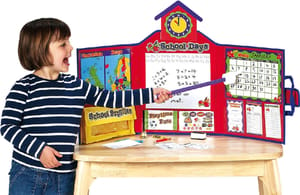
The Pretend and Play School Set, suitable for ages 3–8, turns playing school into a more complete activity. Its 142 pieces include a dry-erase board, pencils, crayons, a calendar, a double-sided map, notepads, stickers, and a bell, all presented in a tri-fold board with carrying handles and storage pockets.
For a child who would rather run a salon, the wooden Hair Salon is suitable from age 3 and includes a salon stand, swivel mirror and pretend hairdressing accessories. It includes brushes, a hairdryer, straighteners, scissors, clippers, styling products, magnetic hairstyles, and a fold-out hairdressing magazine. It requires adult assembly and can also be personalised with an engraved name or message.
These toys are quite different, but that's exactly the point. The most suitable pretend-play toy isn't necessarily the one with the most pieces or accessories. It's the one that gives the child useful props for the kind of game they already want to play.
What should you look for when choosing a pretend-play toy?
Start with the child's interests, then check the practical details.
For preschoolers aged around 3–5, look at:
- Age suitability. Check the stated age for the individual toy, rather than assuming every pretend-play set suits every preschooler.
- How they already play. Do they like animals, making things, playing shops, looking after dolls or inventing stories with little figures?
- How much space you have. Play food and portable role-play sets are quite different propositions from a large farm or dolls house.
- What's included. Check whether figures, animals, dolls or other accessories shown or mentioned are supplied with the toy or need to be bought separately.
- Assembly. Larger wooden toys may need an adult to put them together before play can begin.
- Room for their own ideas. Consider whether the toy offers enough possibilities for the child to return to it and create different games.
You can also think about how the toy fits with things they already own. A few pieces of pretend food could add something new to an existing kitchen or shop, while figures or animals may find their way into all sorts of small-world games.
Finding the right pretend-play toy for your preschooler
There are plenty of ways to play pretend, so you don't need to find a preschooler who loves every one of them.
Watch what catches their attention. A child who is forever caring for soft toys may love playing vet. One who wants to help with every household repair might love their own tools. A keen storyteller may get more from a farm or dolls house, while another child might happily spend an afternoon running a hair salon or taking the register at pretend school.
Once you know which direction to take, have a browse through our Let's Pretend collection for play food, shops, kitchens, dolls, role-play sets and plenty of other ideas. You can also find occupation-inspired toys in our When I Grow Up collection, or browse our wider range of preschool toys.
The choice becomes much easier when you stop looking for the pretend-play toy that appeals to every preschooler and start looking for the one that suits the child in front of you.
