
Some activities grab children’s attention instantly.
Slime stretching across the table. A robot they built themselves suddenly moving. Crystals forming inside a geode. Something fizzing, glowing or bubbling over unexpectedly.
That’s often why hands-on science activities work so well. Children aren’t just sitting and watching something happen. They’re mixing, building, testing and figuring things out as they go.
And because there are so many different types of science activities, there’s usually something to suit every kind of child. Some enjoy messy experiments and reactions, while others are far more interested in building robots, exploring outdoors or discovering how the human body works.
Whether you’re looking for screen-free activities for a weekend, something different for the school holidays or a gift for a particularly curious child, these hands-on science activities are packed with opportunities to build, experiment and explore together.
1. Create Fizzy Reactions and Bubble Experiments
Children rarely lose interest in anything that fizzes, bubbles or unexpectedly overflows across the table.
The fun starts long before the experiment is finished. Measuring ingredients, mixing things together and waiting to see the reaction become part of the excitement itself.
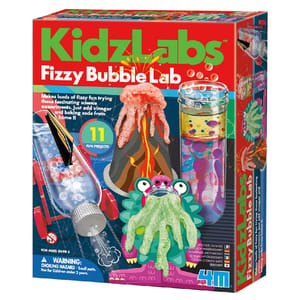
The Fizzy Bubble Lab is perfect for children who enjoy dramatic reactions and hands-on activities. Experiments like fizzy lava and steam boats turn simple household ingredients like vinegar and baking soda into something much more interactive and memorable.
This kind of science play works especially well because it feels active from beginning to end. There’s always something to pour, mix, test or watch closely.

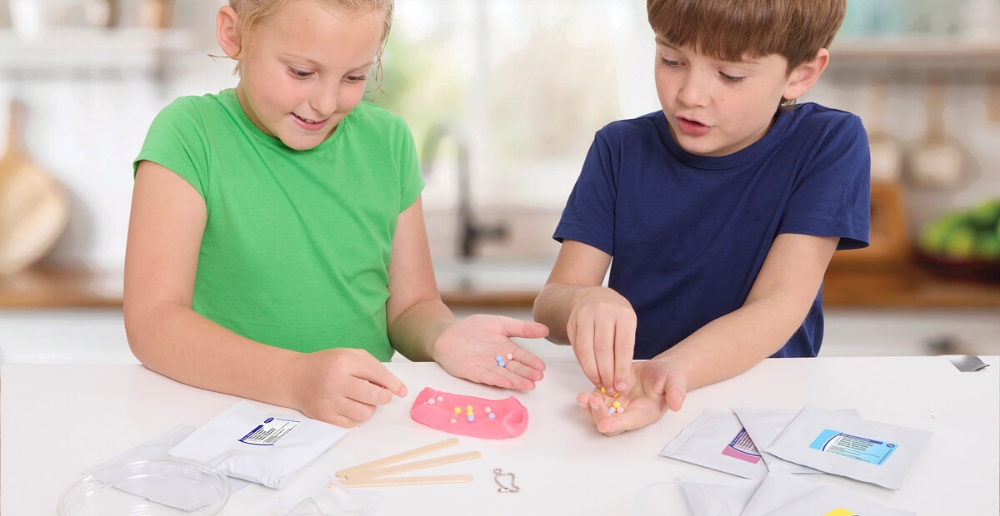
For children who enjoy sensory activities too, Fun with Slime is another brilliant option. Stretching, mixing and experimenting with slime textures quickly becomes the sort of activity children want to repeat once they’ve tried it.
These activities also tend to bring people together naturally. Siblings often wander over to see what’s happening, and grandparents usually enjoy getting involved once the bubbling reactions begin.
2. Turn the Kitchen Into a Science Lab
Some of the best science activities start with everyday objects children already recognise.
Water. Ice cubes. Kitchen ingredients. Cups, bottles and spoons.
That familiarity is often what makes kitchen science feel so approachable. Children can immediately join in without feeling like they need lots of complicated equipment first.
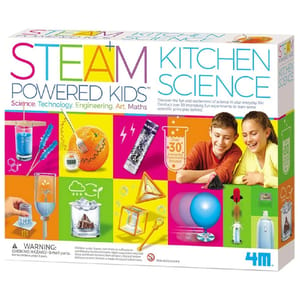
The Kitchen Science kit is full of hands-on experiments using ordinary household items, making it easy for children to test ideas and see reactions happen in front of them.
Activities like these tend to spark lots of questions naturally:
- Why did that change colour?
- Why is this floating?
- What happens if we add more?
- Why did that suddenly fizz?
And usually, the most enjoyable part is not even the final result. It’s the guessing, testing and experimenting along the way.
Kitchen-table science also has a nice, relaxed feel. Children can try things at their own pace, repeat experiments, or slightly change them to see whether the outcome differs the second time around.
3. Explore the Human Body
At some point, most children become fascinated by how the human body works.
Questions about bones, muscles, organs and skeletons tend to appear once children realise just how much is happening inside the body all the time.
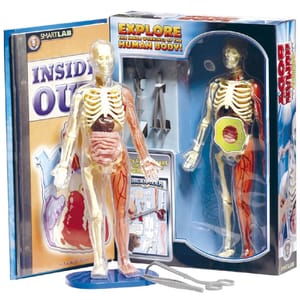
The Human Body Kit gives children the chance to explore those curiosities in a much more interactive way. Instead of simply reading about the body, they can actively build and examine different parts while discovering how everything fits together.
This kind of activity often leads to plenty of conversations, too.
Children might start asking:
- How many bones are in your body?
- Why can you feel your heartbeat?
- What do muscles actually do?
- How does your body heal itself?
Because the activity feels visual and hands-on, children often stay engaged for much longer than they would with something more passive.
Parents and grandparents usually end up learning a few things along the way, too.
4. Build Something That Actually Moves
For some children, the most exciting part of science is building something themselves and seeing it work afterwards.
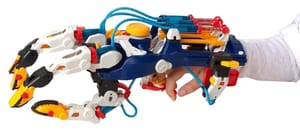
The Hydraulic Cyborg Hand is one of those projects that immediately feels impressive once it starts moving. Building a functioning hand without batteries or a motor makes the whole process feel much more rewarding because children can clearly see how the mechanics work together.
Older children, especially, tend to enjoy projects like this because they can become completely absorbed in the building process.
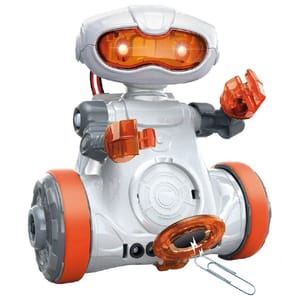
For children interested in robotics and invention, Mio the Robot - Next Generation combines building, electronics and interactive play in a really engaging way. Assembling and programming a robot themselves gives children something they can continue experimenting with afterwards, too.
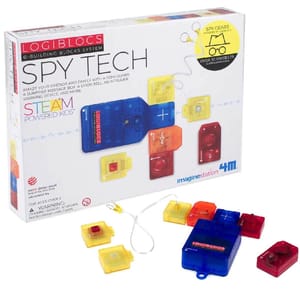
Meanwhile, Logiblocs - Spy Tech is ideal for children who enjoy testing combinations and figuring things out independently. Plugging together the colour-coded blocks to create different circuits encourages lots of experimenting, problem solving and trial-and-error play without feeling overly structured.
These types of activities are especially popular with children who enjoy building kits, invention-style projects and seeing how things work behind the scenes.
5. Try Glow-in-the-Dark Experiments
Glow-in-the-dark activities instantly make experiments feel more exciting.
Turn the lights off, and suddenly even simple reactions feel completely different.
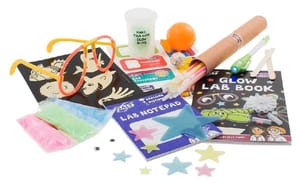
The Glow Lab is packed with glowing experiments children can try at home, making it a brilliant option for evenings, weekends or children who enjoy colourful, visual activities.
Part of the excitement comes from not quite knowing what the final result will look like until the lights go down.
Children often become completely focused on waiting to see what glows, lights up or changes next.
Glow experiments also work brilliantly as family activities because everyone naturally gathers around to watch the results together.
And unlike some activities children try once and move on from, glow-in-the-dark experiments are usually the sort of thing they ask to do again.
6. Become a Rock and Crystal Explorer
Crystals, rocks and geodes have a built-in sense of mystery to them.
Digging into something to discover what’s hidden inside feels much more like treasure hunting than a traditional science activity, which is often why children find it so satisfying.
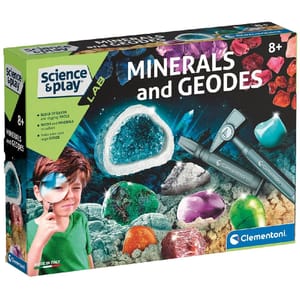
The Minerals & Geodes kit is ideal for children who enjoy collecting, excavating and discovering unusual things. Using the hammer and chisel to uncover rocks and minerals makes the activity feel active right from the beginning.
Creating a crystal geode afterwards adds another layer of anticipation, too, especially once children start checking back to see how the crystals are forming.
Activities like this also tend to slow things down in a good way. Children often become completely focused on tiny details such as textures, patterns, colours and shapes that they might otherwise overlook.
And once the crystals are finished, many children enjoy keeping them on display afterwards as part of their collection.
7. Head Outdoors and Explore Nature
Some science activities are best taken outside.
Gardens, parks and outdoor spaces are full of things children can investigate more closely once they have the tools to do it.
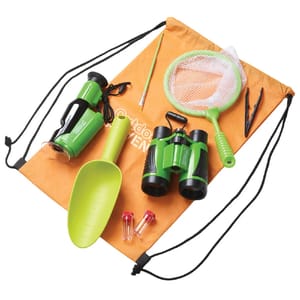
The Outdoor Adventure Mega Explorer Kit is perfect for children who enjoy spotting wildlife, examining interesting finds or looking at things in more detail. With binoculars, a microscope and hand tools included, it encourages children to slow down and properly explore what’s around them.
Children often enjoy:
- bug spotting
- comparing leaves and flowers
- looking at bark and rocks close up
- spotting birds with binoculars
- examining insects more carefully
- collecting interesting discoveries outdoors
This kind of activity works especially well because it combines movement, exploration and screen-free play naturally.
It’s also the sort of thing families can easily do together, whether that’s exploring the garden, heading to the park or taking the kit away on holidays and day trips.
8. Start a Little Scientist Notebook
One of the nicest things about hands-on science activities is that they often continue beyond the experiment itself.
Children frequently want a place to record discoveries, sketch ideas, or keep track of what they’ve tested.
A notebook quickly becomes somewhere to:
- draw crystals and rocks
- sketch bugs and leaves
- write predictions
- record slime recipes
- design inventions
- track experiments
- collect interesting facts
Some children like carefully labelling everything, while others prefer filling pages with diagrams, doodles and half-finished ideas. Both work perfectly well.
Science activities naturally encourage children to notice details and ask questions, so notebooks often become ongoing projects they return to over time.
Parents and grandparents can join in, too, by helping children compare results, suggest new experiments, or record discoveries together.
Why Hands-On Science Activities Work So Well
Hands-on science activities work because they feel active and engaging from the start.
Children are not simply watching something happen. They’re building, testing, mixing, exploring and seeing results for themselves.
And because there are so many different ways to approach science play, children can usually find activities that match what they already enjoy, whether that’s building robots, making slime, collecting crystals, or exploring outdoors.
These activities also create lots of natural opportunities for family interaction along the way. Conversations start easily when everyone is trying to guess what will happen next or examining discoveries together around the table.
Whether children are experimenting with glowing reactions, building moving inventions or heading outside with binoculars and microscopes, hands-on science activities give them opportunities to explore, create and discover at their own pace.
If you’re looking for more fun science activities for children, explore our range of educational science toys and hands-on discovery sets designed for curious children who love experimenting, building and exploring.
