


Sometimes it’s not that children can’t do maths; it’s that maths starts to feel bigger and scarier than it really is.
A wrong answer in class, a worksheet that feels rushed, or hearing other children shout out answers more quickly can all knock confidence. Before long, even simple sums can start to feel stressful.
If this sounds familiar, you’re certainly not alone.
Many children go through a stage where maths feels intimidating, and for some, it can become the subject they worry about most. The good news is that confidence with numbers doesn’t usually come from doing more worksheets or getting every answer right. More often, it grows from making maths feel familiar, manageable and part of everyday life.
The aim isn’t perfection.
It’s helping children feel comfortable enough to have a go.
With a little encouragement, plenty of praise and some playful ways to bring numbers into daily routines, maths can start to feel much less daunting and a lot more approachable.
Why children can feel intimidated by maths
Maths can sometimes feel more exposing than other subjects.
With reading or creative play, children can often work at their own pace, but maths can sometimes feel like there’s one right answer and everyone else already knows it.
That can be a lot of pressure.
Some common reasons children lose confidence in maths include:
- worrying about getting the wrong answer
- feeling rushed
- comparing themselves to classmates, siblings or friends
- not understanding why maths matters in real life
- finding abstract concepts harder to picture
For some children, it’s times tables. For others, it might be fractions, telling the time or mental maths.
That’s completely normal.
The important thing is helping them see that maths is not about being “good” or “bad” at it. Like reading, swimming or learning to ride a bike, it gets easier with practice and confidence.
Use everyday moments to make maths feel natural
One of the best ways to help children feel more relaxed about maths is to take it out of a formal setting.
Some of the best maths practice happens without children even realising it.
In the kitchen
Baking is brilliant for maths confidence.
You can naturally bring in:
- counting spoonfuls
- measuring ingredients
- halves and quarters
- timing
- weighing
Fractions often feel much less intimidating when children can see them in real life.
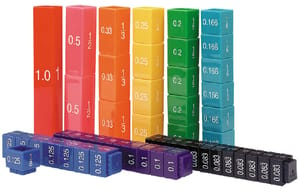
This is where something like Fraction Equivalency Towers can be really helpful too, as it visually shows how fractions, decimals, and percentages relate to one another in a hands-on way.
Make telling the time part of the day
Telling the time can feel tricky because it combines number recognition, counting in fives and understanding routines.
Using daily moments helps.
Try asking:
- What time do we leave for school?
- How long until bedtime?
- Can you tell when it’s half past?
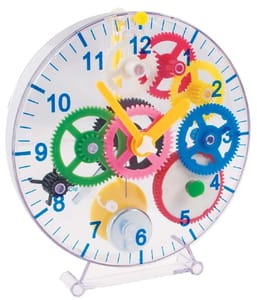
The Make a Clock set is a lovely way to make this feel less abstract, as children can build their own working clock and see the hands move.
That kind of hands-on learning often helps things click.
Shopping and money games
Shopping is another fantastic way to make maths feel natural and part of everyday life.
Even very young children can join in with simple tasks, like counting apples as they go into the trolley, spotting numbers on price labels or helping work out how many items are in the basket.
As children get older, these little moments can become slightly more challenging. You might ask them to estimate the total cost of a few items, compare prices between two products, or help work out the change at the till.
At home, role play can make this even more fun. Our Cash Register and Calculator is perfect for playing shops and helps children practise recognising coins and notes, adding totals and working out change in a way that feels playful rather than like schoolwork. With pretend money, a working calculator and a ringing till drawer, it’s a brilliant way to build confidence with numbers through everyday play.
These small everyday conversations help numbers feel normal rather than something that only happens at school. Often, children feel much more relaxed practising maths when it’s linked to real life and doesn’t feel like a lesson.
Make maths playful through games and activities
Children often engage much more confidently when maths feels like play rather than work.
Games remove some of the pressure and shift the focus away from “getting it right first time”.
This is often where confidence starts to build.
Start with early number confidence
For younger children, early number recognition is the foundation.
Simple hands-on toys work beautifully here.
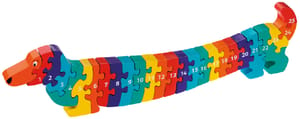
The Dachshund 1-25 Number Puzzle is a lovely way to support early number sequencing, colour recognition and problem-solving.
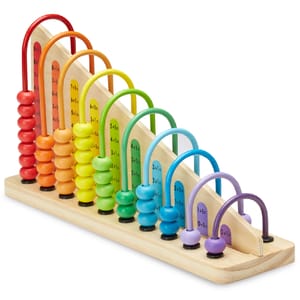
Similarly, the Add & Subtract Abacus is fantastic for making early sums visual.
Children can move the beads themselves and physically see numbers being added or taken away.
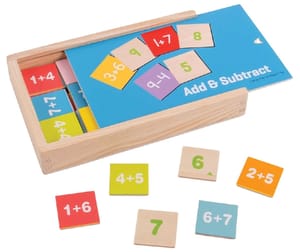
The Add & Subtract Box is another brilliant option for simple number work at home, especially for children aged 3–8 who are just beginning to work with sums.
These kinds of tactile toys can make a huge difference.
Build confidence with times tables
Times tables can often be one of the biggest sticking points.
Rather than repeating them in a pressured way, games can make practice much more enjoyable.
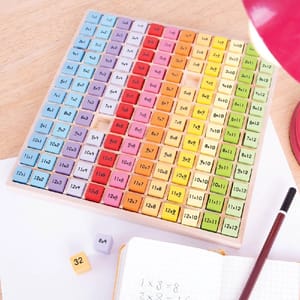
The Times Table Tray is a lovely visual way to work through multiplication, with colour-coded cubes helping children spot patterns.
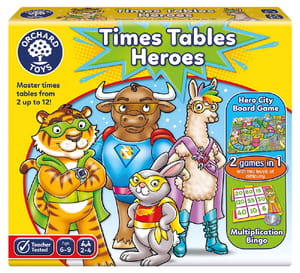
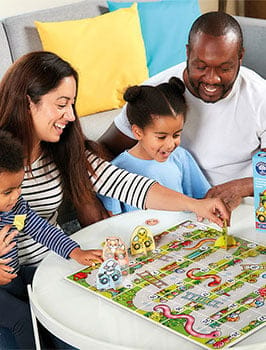
For a more game-led approach, Times Tables Heroes is excellent.
Because it turns multiplication into a board game adventure, it helps take away the “test” feeling.
This is especially helpful for children who switch off as soon as they hear the words times tables.
Make mental maths feel fun
Mental maths often feels intimidating because children can’t physically see the numbers.
That’s why quick-fire games can really help.
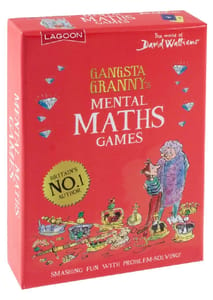
The Gangsta Granny Mental Maths Game is a brilliant way to practise these skills in a much more playful setting.
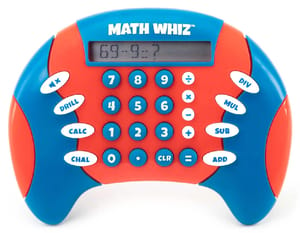
Likewise, Maths Whiz offers instant feedback, which many children find reassuring.
Instead of waiting to be told whether they’re right, they can see the answer immediately and keep practising at their own pace.
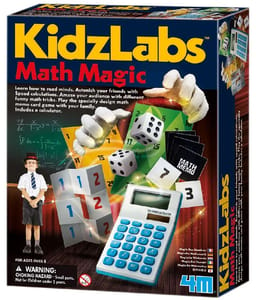
For older children, Maths Magic is a really lovely way to make numbers feel exciting and confidence-boosting.
Anything that helps children associate maths with enjoyment rather than stress is a win.
Focus on confidence, not perfection
This is perhaps the most important part.
A child who feels confident enough to try will usually learn far more than one who is frightened of making mistakes.
Try praising things like:
- effort
- perseverance
- problem-solving
- trying a different method
- checking their work
For example:
“I really like how you kept trying that.”
or
“You worked that out really carefully.”
These kinds of comments build resilience.
Mistakes are part of learning.
Sometimes the most useful thing you can say is:
“That’s okay, let’s work it out together.”
Small daily habits that build confidence over time
Confidence with maths is rarely built in one big moment.
It usually grows little by little.
Try small daily habits like:
- counting stairs
- quick sums in the car
- spotting numbers on houses
- counting coins
- telling the time together
- number nursery rhymes
Even five minutes a day can make a huge difference.
Consistency matters far more than long practice sessions.
Keep it calm and pressure-free
If a child already feels nervous about maths, too much focus can sometimes make it feel even more overwhelming.
Try to keep things light and playful. Some days will go better than others, and that’s completely fine.
The aim is not to make every child a maths expert overnight. It’s simply to help them feel that numbers are something they can do.
With gentle encouragement, practical everyday activities and educational toys like those mentioned throughout this article, maths can begin to feel much more familiar and far less intimidating.
And once confidence starts to grow, everything else tends to follow.